
Here's the short version, straight from a roofer who fixes both kinds of problem every week: if your roof has years of life left and the damage is contained to one spot, repair it. If the wear is spread across the whole roof, the leaks keep coming back in new places, or the decking underneath is going soft, it's time to replace — and more patches are just renting time. That's the honest line. The rest of this post is how to tell which side of it your roof is on, because from the ground (and sometimes even from the ladder) the two can look surprisingly alike.
Repair is the right call more often than homeowners fear. Wind lifts a course of shingles in a storm. Flashing around a chimney or skylight gives out and lets water track inside. A vent boot cracks. In every one of those cases the roof itself is still sound — one component failed, and a proper roof repair fixes the actual entry point, which is often nowhere near where the stain shows up on your ceiling. If your roof is in the first half of its expected life and the problem is localized like that, repairing it is exactly what we'd do on our own homes. Any contractor who looks at a single failed flashing and jumps straight to a full replacement quote should have to show you a lot of photos to justify it.
Replacement earns its place when the problems stop being local. Granules washing into the gutters and bald, dark patches across the shingles. Shingles curling at the edges or cracking on every plane of the roof, not just one. A leak you fixed last year coming back somewhere new — because the water is finding the next weakest point in a system that's worn out everywhere. Soft spots underfoot, a visibly wavy roofline, or daylight showing through the boards in the attic. Any one of these on an aging roof means the shingles are done protecting the structure, and another patch is treating a symptom.
Northeast PA moves that line earlier than milder places do. Our winters put a roof through dozens of freeze-thaw cycles: meltwater works into a hairline gap during the day, freezes at night, and pries the gap wider — over and over from December to March. Ice dams at the eaves push water uphill, back under the shingles, where only intact underlayment and ice-and-water shield stand between it and your ceiling. Weeks of snow sitting on the roof load the structure and hide damage until spring. A borderline roof that would limp along for years in a gentler climate gets found out here every February, which is why we judge "how much life is left" against our winters — not a national average.
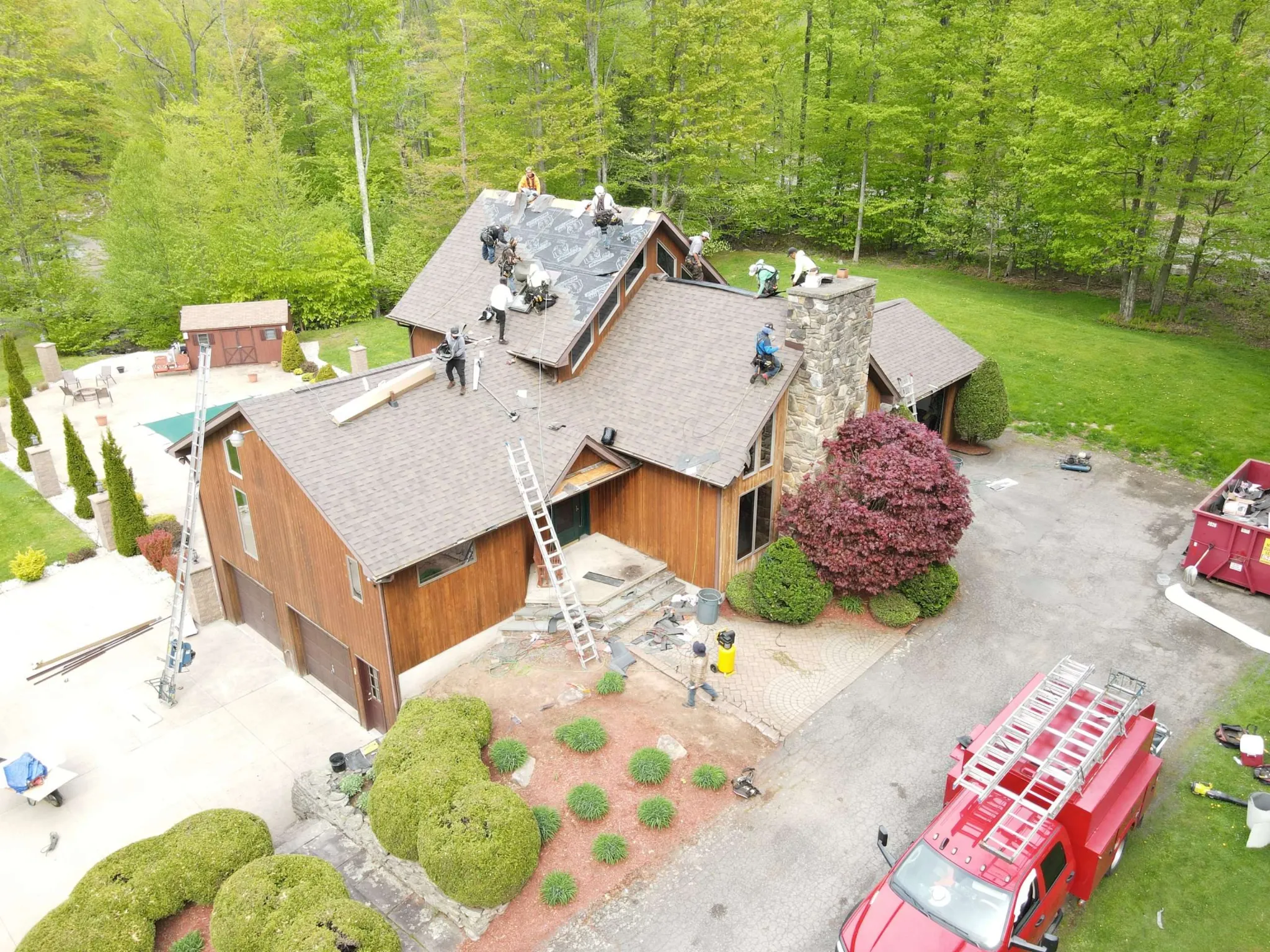
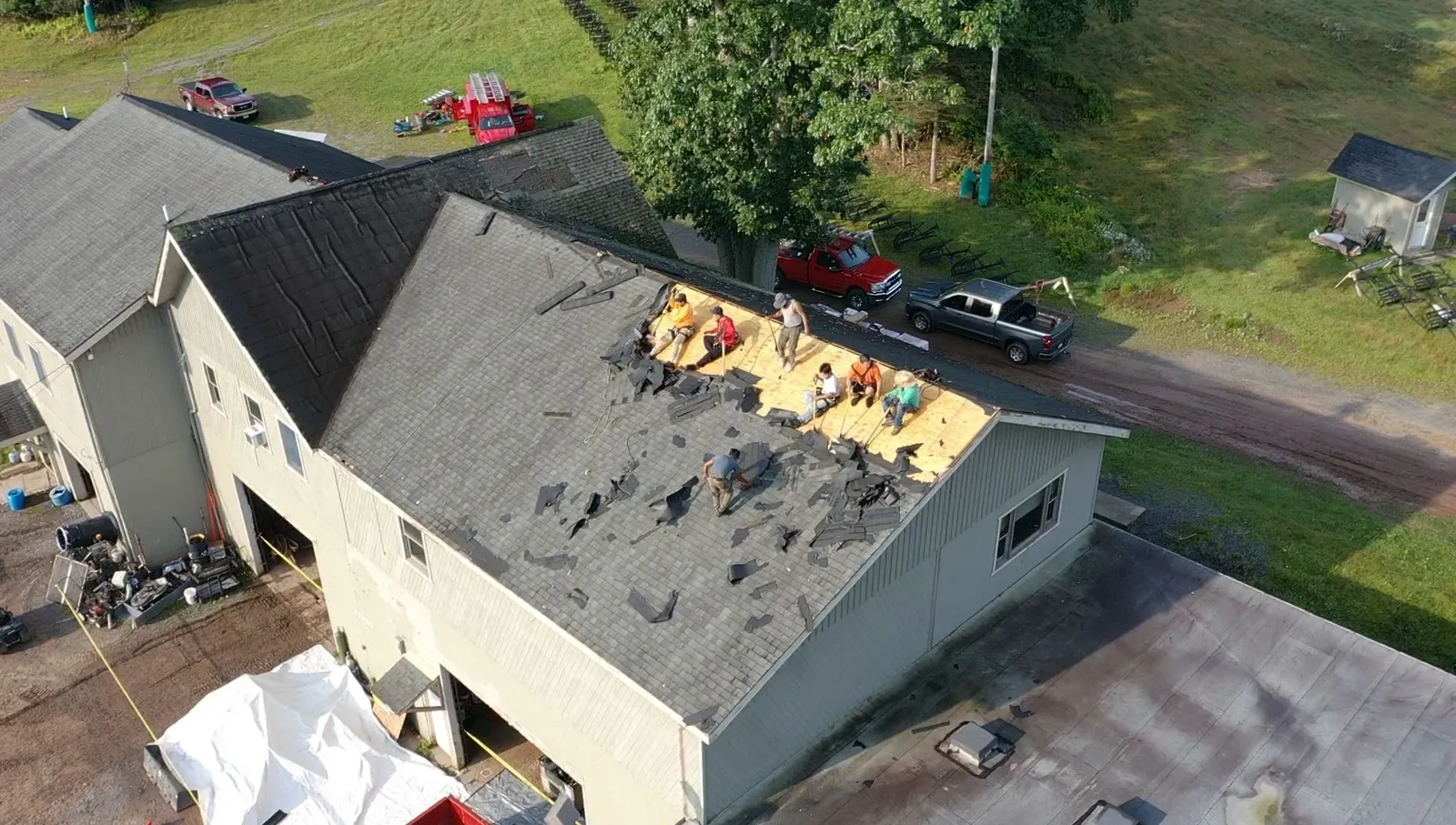
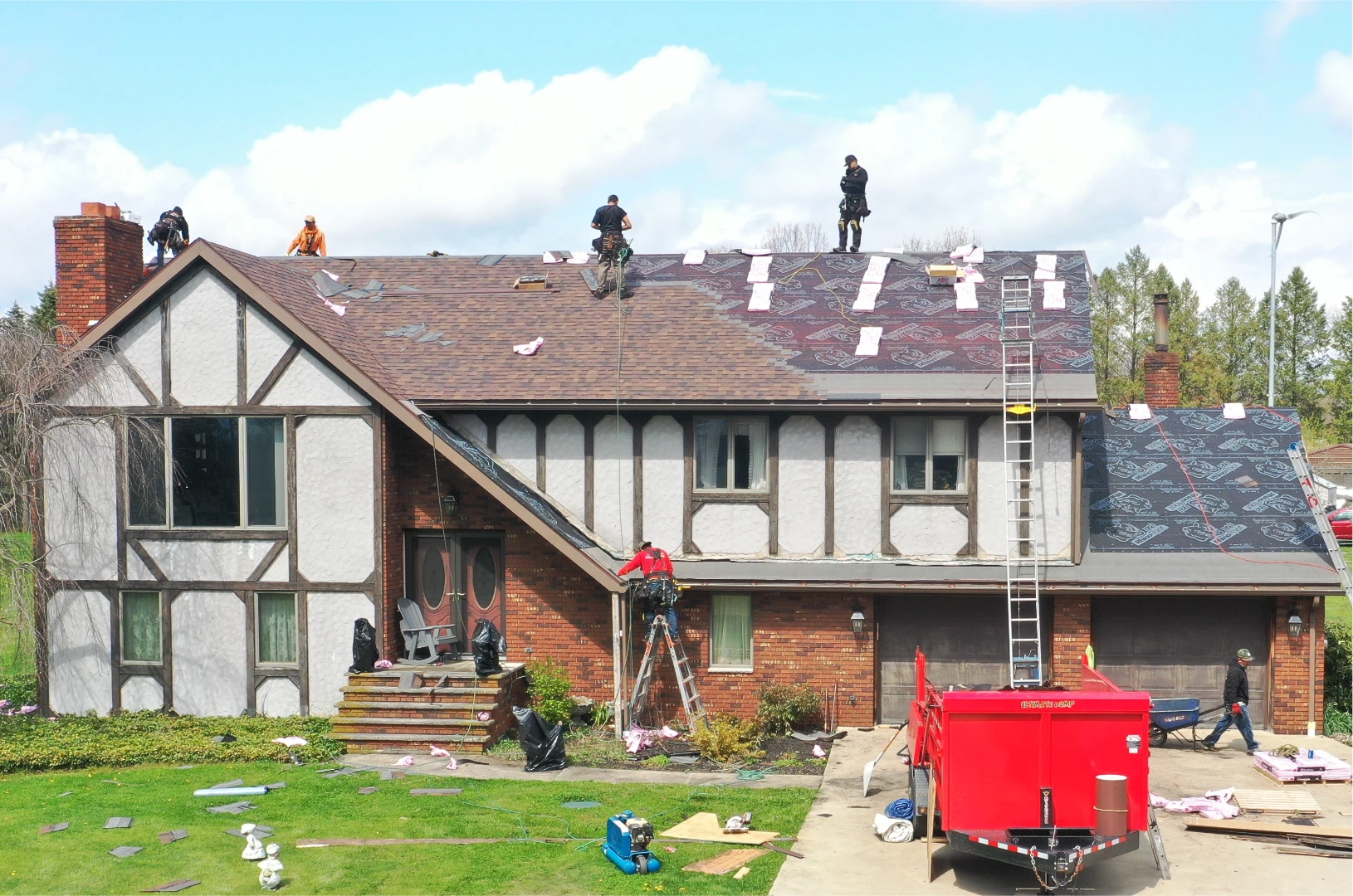
There's also honest math in the decision, even without dollar figures. Every repair on a roof that's near the end of its life is money you don't get back — patch it enough times and you'll have paid for the repairs and the replacement. Sometimes a repair on an old roof is still the right bridge: you're selling in the spring, or you need a season to budget. We'll do that job and do it well — but you should choose it knowing it's a bridge, not a fix. When the roof is truly done, a full residential roof replacement resets everything at once: the old layers come off, the decking gets inspected and repaired, and the new system goes on with the ice protection and ventilation our climate demands.
What should that decision look like from your side? Evidence. We inspect the roof and the attic, photograph what we find, and show you — soft decking, worn shingles, failed flashing, whatever is actually there. If it's a repair, we say so and fix it. If it's a replacement, you'll see exactly why before you're asked to decide anything. One more distinction worth knowing: storm damage is often an insurance claim, and we document it and walk you through the process; ordinary wear and age are not. A roofer who can't tell you which one you're looking at — or won't put it in photos — is guessing with your money.
If you're staring at a water stain right now and wondering which conversation you're about to have, the good news is that finding out costs nothing: we'll take a look, give you the straight answer with photos, and quote whichever job your roof actually needs. And if it does turn out to be replacement time, roofing financing means the right fix doesn't have to wait on the budget. Either way, you'll know exactly where your roof stands before winter tests it again.