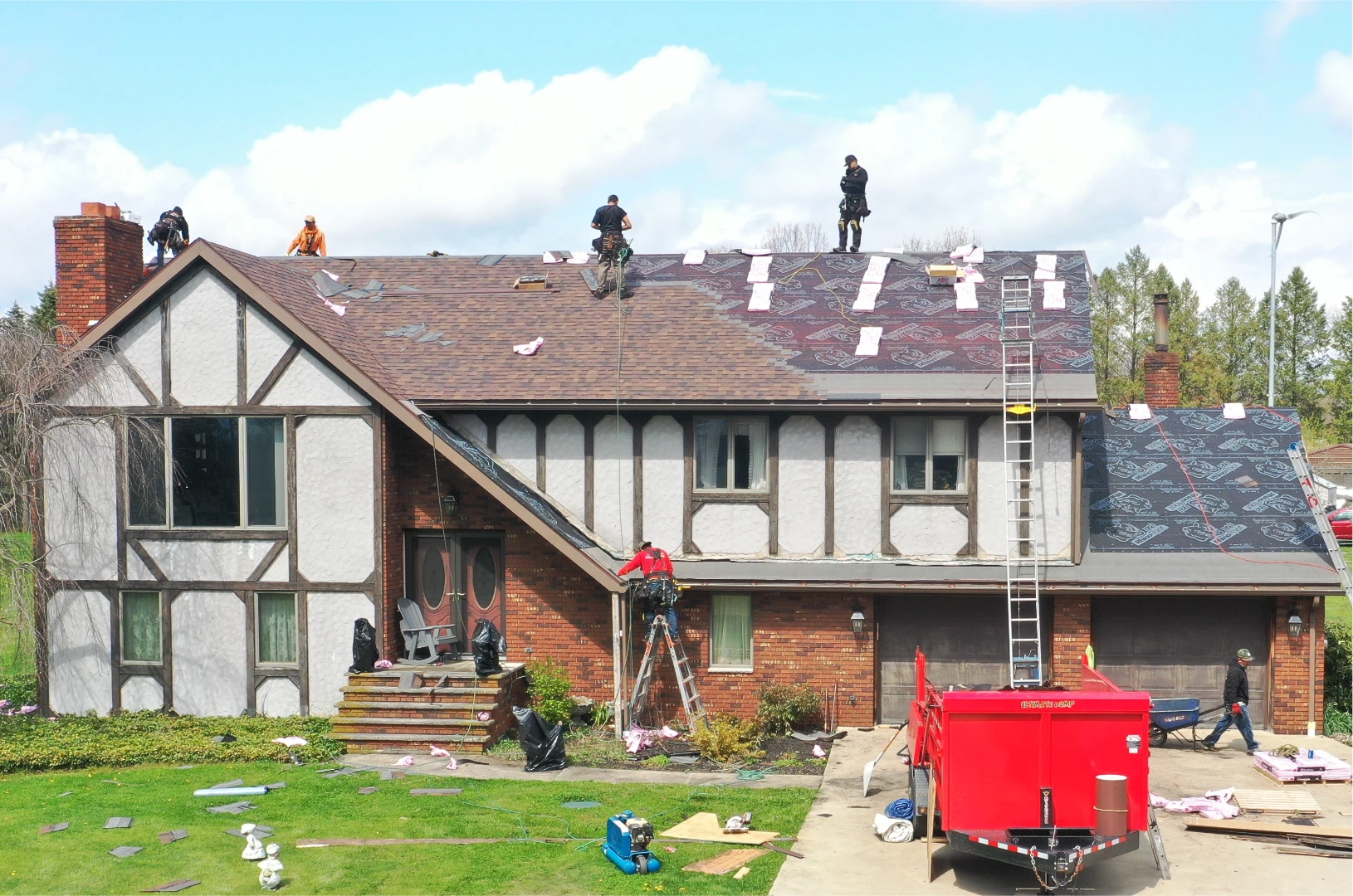
If you're searching for what a new roof costs in Northeast PA, here's the honest answer no roofer likes to put in writing: it depends — and any contractor who gives you a firm price over the phone, before anyone has set foot on your roof, is guessing. A roof replacement isn't a boxed product with a sticker price. It's a custom job priced to your specific home, and a house the same size two streets over can come in meaningfully higher or lower. What we can do is show you exactly what moves the number, so you walk into any estimate — ours or a competitor's — knowing what you're actually paying for.
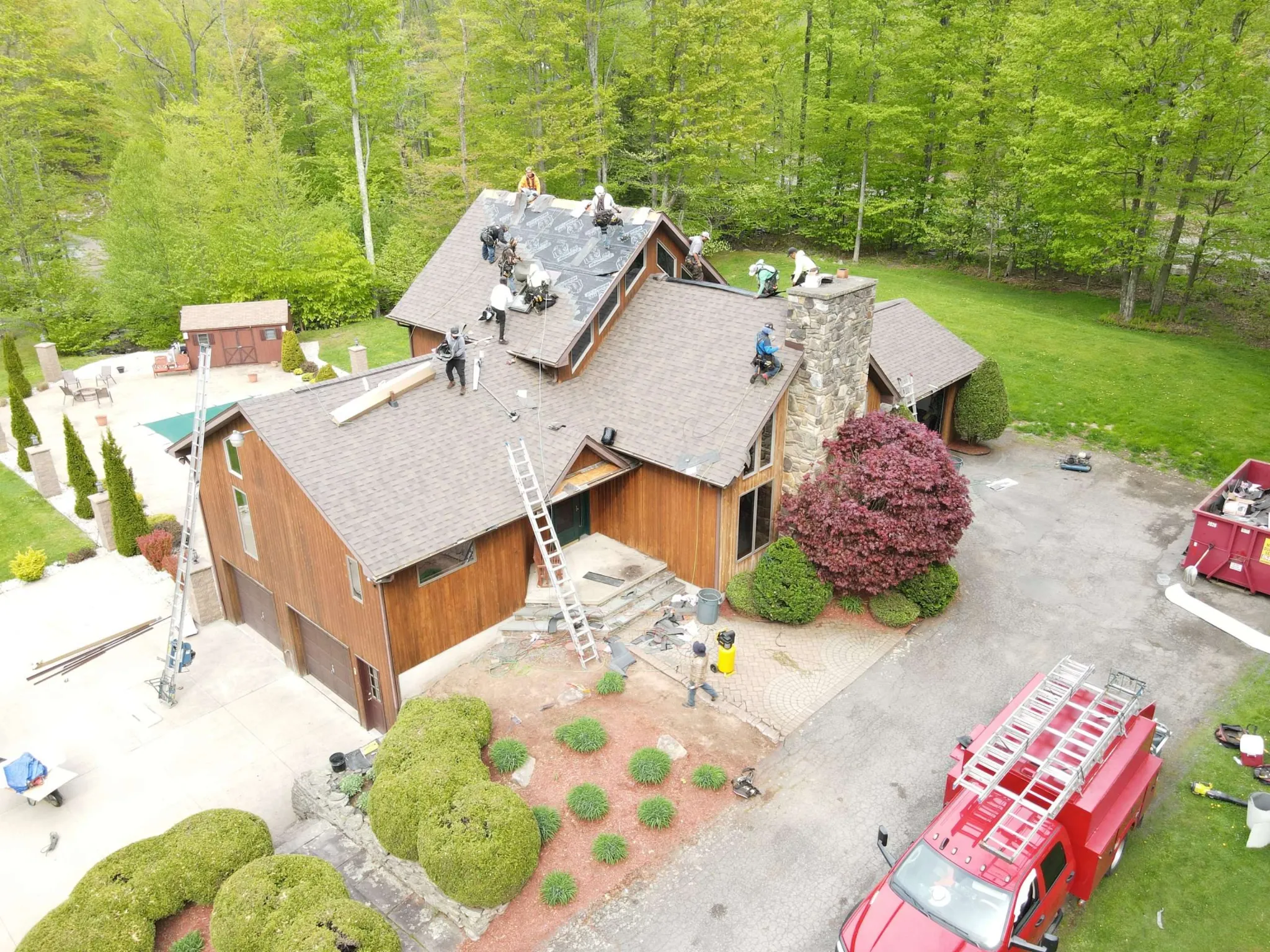
The first factor is the size and shape of your roof. Roofers price by the "square" (a 10-by-10-foot area), so a bigger footprint means more material and more labor — but square footage alone doesn't tell the story. A simple gable roof with two clean planes goes on far faster than a cut-up roof with multiple valleys, hips, dormers, and rooflines meeting at odd angles. Every valley and transition is more flashing, more cuts, and more time, and a lot of the older homes around here have exactly that kind of character. When you're pricing a residential roof replacement, the complexity of the roof is often a bigger driver than the raw size.
Pitch and access come next. A steep roof can't be walked safely, so it needs staging, harnesses, and slower, more deliberate work — all of which cost more than a low-slope roof a crew can move across easily. Access matters too: a tight lot, a three-story home, landscaping we have to protect, or a driveway a dumpster and material truck can't reach all add labor. In a hilly region like ours, two houses with nearly identical roofs can price differently purely on how hard they are to get onto and work from safely.
Material is the factor most homeowners already expect to matter. Architectural asphalt shingles are the most common choice and the most budget-friendly; they hold up well and come in a wide range of colors. Step up to a standing-seam metal roof and the material and specialized labor cost more up front, but it sheds snow and ice and can outlast asphalt by decades — a real advantage in NEPA winters. Slate and specialty materials, common on the historic homes you'll find around Scranton and Wilkes-Barre, are the most labor-intensive of all. The material you choose sets the floor; everything else adjusts from there.
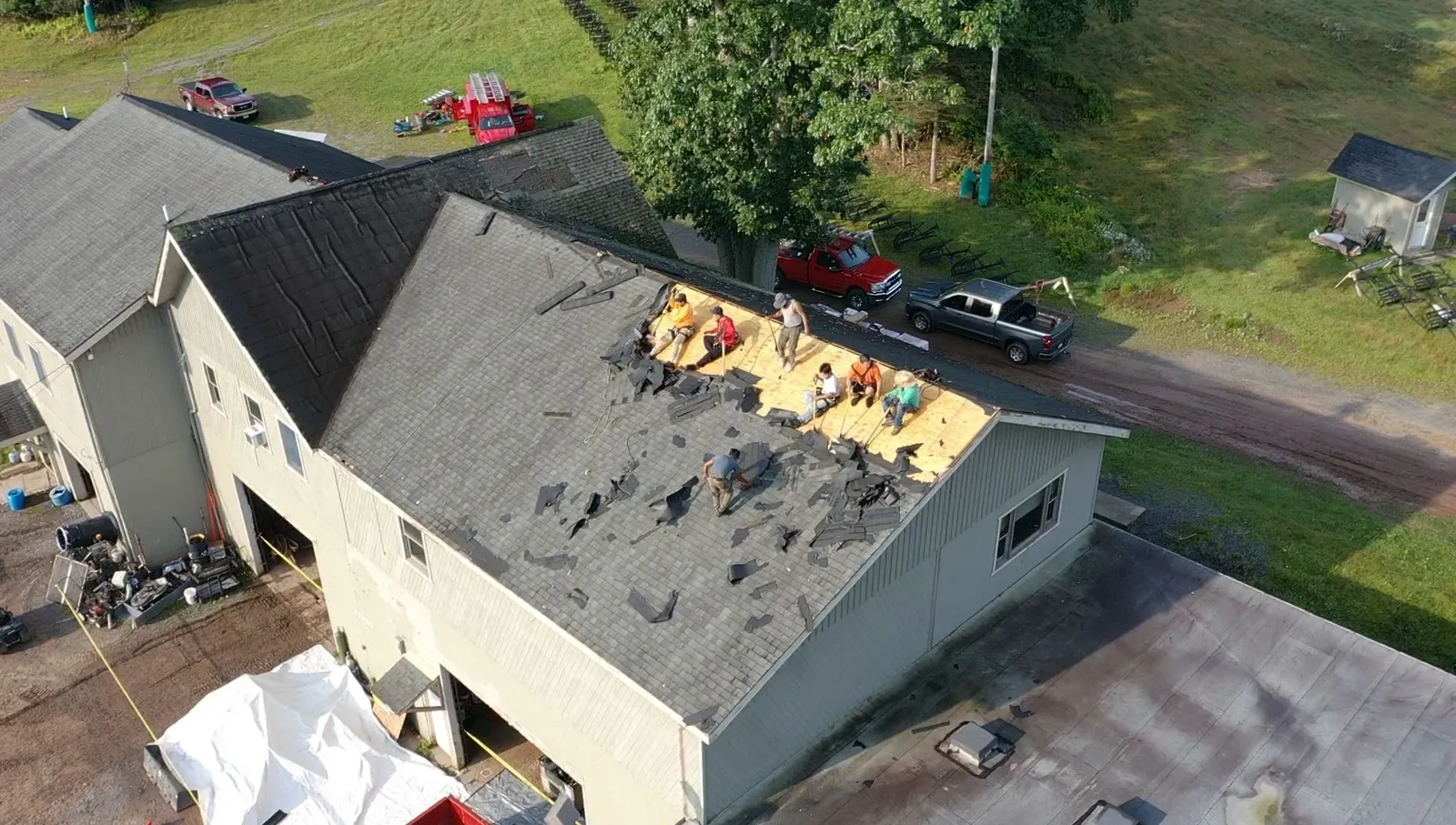
How much old roofing has to come off matters as well. If your home already carries two layers of shingles, code won't allow a third — it all has to be torn off and hauled away, which is more labor and more disposal than a single-layer tear-off. A full tear-off is also simply the right way to do it: it's the only way to see and fix what's underneath instead of shingling over problems and sealing them in.
And what's underneath is the big unknown. Until the old roof is off, no one can see the true condition of the decking — the wood surface the shingles fasten to. If years of small leaks have left plywood soft or rotted, that decking has to be replaced before new shingles go on. This is the single biggest reason an honest estimate happens on-site and not over the phone: a good roofer inspects your attic and roof, accounts for what's likely, and tells you straight how any hidden damage would be handled — rather than quoting a number that quietly balloons on install day.
Our climate adds real cost that roofers in milder regions can skip. Proper ice-and-water shield along the eaves and valleys is essential defense against the ice dams that form during a Northeast PA winter, and cutting that corner is how roofs leak in February. Adequate attic ventilation, correct flashing around chimneys and skylights, drip edge, and up-to-code underlayment all factor in too. A roof built for our winters is specified differently than the cheapest roof someone can throw on — and that difference is worth understanding before you compare two estimates side by side.
So why won't we publish a price range? Because a range wide enough to be honest is too wide to be useful, and a range narrow enough to look useful would be dishonest for your particular roof. We'd rather come out, look at your actual roof, and hand you a clear, itemized number you can trust — for free, with no pressure. And if the timing is tight, we offer roofing financing so a roof you need doesn't have to wait. Whether you're in Scranton, Wilkes-Barre, or anywhere across the valley, that's the honest way to find out what your roof will really cost.