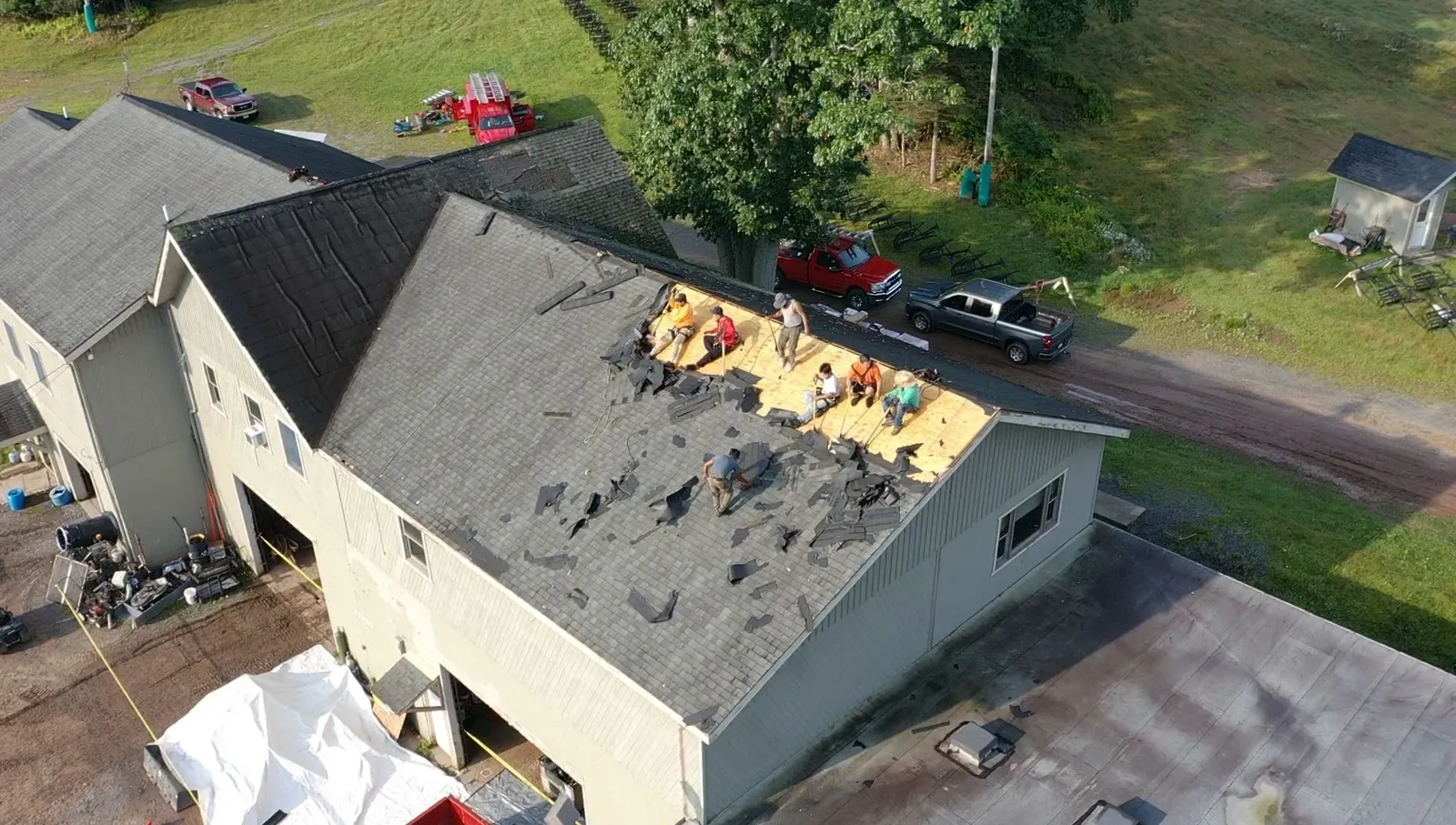
When a storm gets into your roof, you inherit two problems at once: water where it doesn't belong, and a claims process most homeowners have never been through. Here's the short version, and the rest of this post is the detail. Stay off the roof. Stop the bleeding inside. Photograph everything before anything gets cleaned up or repaired. Get a local roofer up there to document the damage properly. And if the damage is sudden storm damage — not slow wear — call your insurance company promptly, because that's exactly what your policy is for.
Northeast PA is hard on roofs in a particular way. Wind funnels through the valley and lifts, creases, or strips shingles — sometimes a whole course at a time. Nor'easters drop heavy, wet snow that loads the structure for weeks. Freeze-thaw cycles pry at every small gap, and ice dams build at the eaves and push meltwater uphill, back underneath the shingles. Falling limbs do their own blunt damage. The important distinction for your wallet: insurance is built for the sudden events — the windstorm, the fallen branch, the ice storm — not for a roof that's simply worn out. A roofer who can't tell you honestly which one you're looking at is the wrong roofer to start with.
In the first 24 hours, think safety and documentation, in that order. Don't climb onto a storm-damaged roof — wet shingles, hidden soft spots, and loose material make it genuinely dangerous, and nothing up there is worth a fall. Inside, move what you can and catch the water. Then photograph and video everything: the ceiling stains, the attic, whatever's visible from the ground, debris in the yard, the date on your phone doing the timestamp work. If emergency measures are needed — a professional tarp, a board-up — keep every receipt; reasonable steps you take to prevent further damage are generally part of the claim. What you shouldn't do is make permanent repairs before anything is documented, because you can't claim what no one can see. A proper emergency roof repair starts with a tarp and a camera, not a nail gun.
The claim itself runs on a fairly predictable track. You report the damage to your insurer promptly — policies expect that. The company sends an adjuster to inspect and write a scope of loss, and your deductible comes off whatever is approved. Here's the part experienced homeowners get right: have your own roofer inspect and document the roof too, with photos, ideally before or alongside the adjuster's visit. Adjusters look at a lot of roofs quickly; a roofer who works on them every day catches the creased shingles, lifted flashing, and opened seams that a fast walk-around misses, and the photos make sure the scope reflects everything the storm actually did. That's how we handle it: we document everything and walk you through the process, and if what we find is wear rather than storm damage, we tell you that straight — filing a claim for an old roof helps nobody.
Ice dams deserve their own paragraph, because they're the most NEPA form of roof damage there is. Snow melts over the warm part of the roof, refreezes over the cold eaves, and the ridge of ice that forms dams the next round of meltwater — which then has nowhere to go but sideways and up, under the shingles. Water staining along exterior walls and ceilings in late winter is the classic signature. Policies differ on the details, so document the interior damage and ask your insurer — but understand that the cure is prevention: attic insulation, proper ventilation, and ice-and-water shield installed along the eaves and valleys. If your roof takes ice-dam damage winter after winter, that's not bad luck, it's a roof telling you it wasn't built for this climate — and it's worth an honest assessment of whether a roof replacement with real ice protection is the actual fix.
One warning, because we see it after every serious storm: the damage brings out the storm chasers. Out-of-area crews going door to door, pressure to sign 'today only', demands for a big deposit up front, and the classic offer to 'take care of your deductible' — which is a polite phrase for insurance fraud, on a claim that has your name on it. A storm-damaged roof gets fixed once, by whoever you sign with, so vet that contractor exactly as carefully as you would with time to spare. We wrote a full guide on how to choose a roofing contractor in Northeast PA — the paperwork to ask for, and the red flags to walk away from.
If a storm has already found your roof, don't spend a week wondering what you're looking at. Contact us and we'll come out, inspect the roof and the attic, photograph what we find, and give you the straight answer: a repair, a legitimate insurance claim, or the honest news that it's wear — and what each path looks like from there. The inspection is free, the documentation is yours either way, and the sooner the roof is dried in, the less the storm ultimately costs you.